
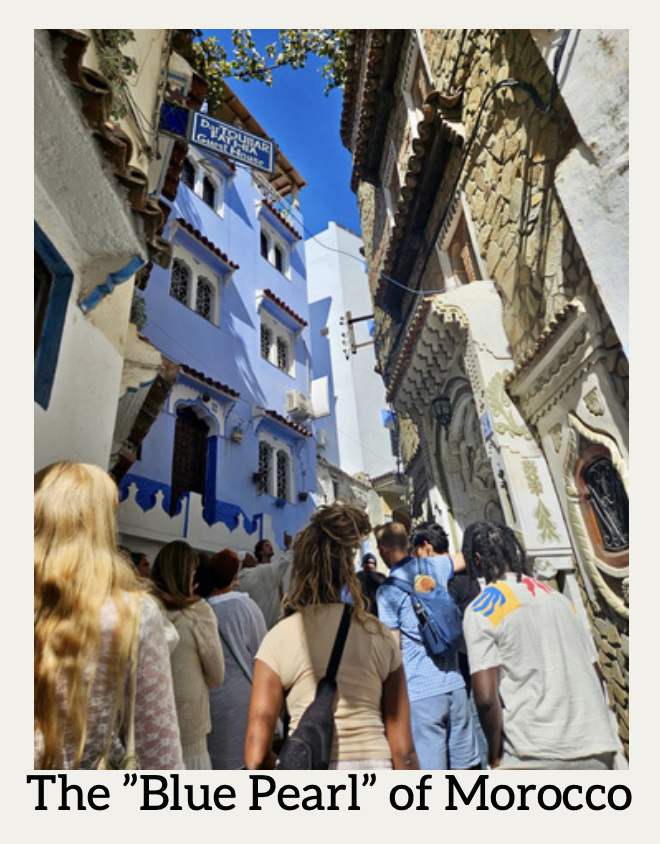
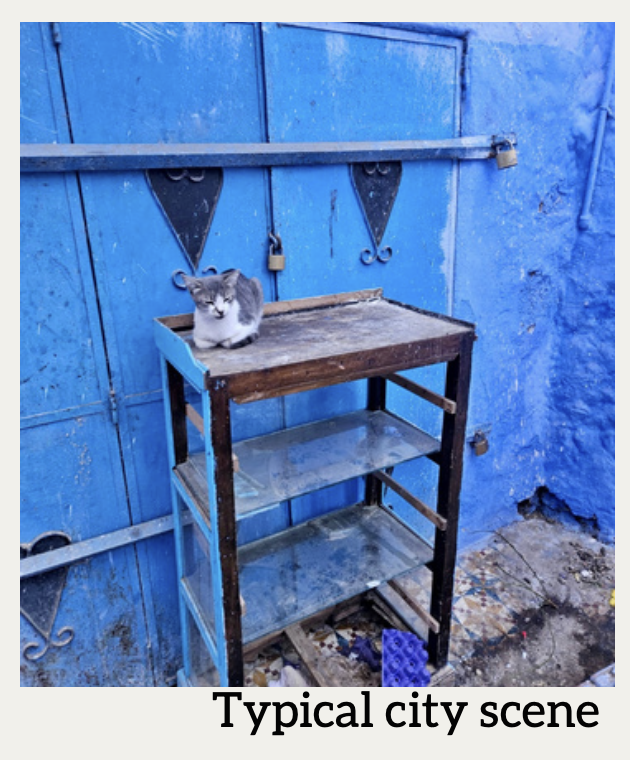
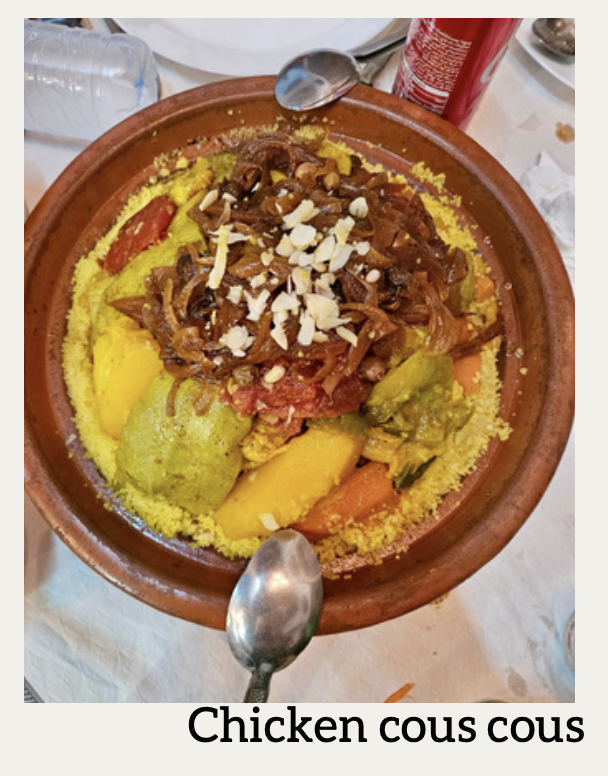
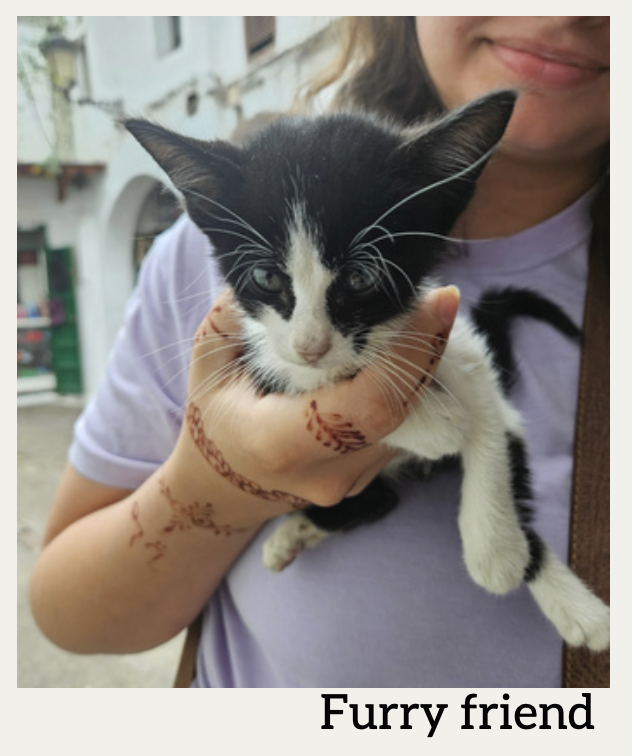
Now, it is open for everyone to visit, and people of many religious backgrounds—Muslim, Jewish, Christian, etc.—live there in harmony. As we toured the streets, we got to experience the bustling markets and visit the historic mosques as we learned more about Islam and Moroccan culture. What was particularly interesting was learning to haggle in the markets. In the US and Spain, items and crafts are listed for one set price. However, in Morocco, almost everything is up for negotiation. It felt a little scary at first, but once we got the hang of it, it was like playing a game with every seller on the street. It was a lot of fun! As in Spain, food is a wonderful way of connecting with the people and culture in Morocco. With many dishes unique to the country, dishes such as couscous, chicken tahine, and Moroccan salad offer a vibrant fusion of flavors, blending Arab, Berber, Mediterranean, and French influences. Spices such as saffron, cumin, and cinnamon are commonly found in the food. Lastly, it’s difficult to experience Morocco without engaging with its furry residents who add charm to the cityscape—the cats! Stray cats can be found lounging everywhere in the markets (often on the merchandise!) and bounding down the roads and stairs of the medina. The cats are part of the local population, are often well cared for by locals even if they aren’t officially pets, and are seen as symbols of good luck.
