ICS Fall 2025

Calendar & Schedule

Academic Calendar


September 17

Student Arrival

September 18

Orientation

September 19

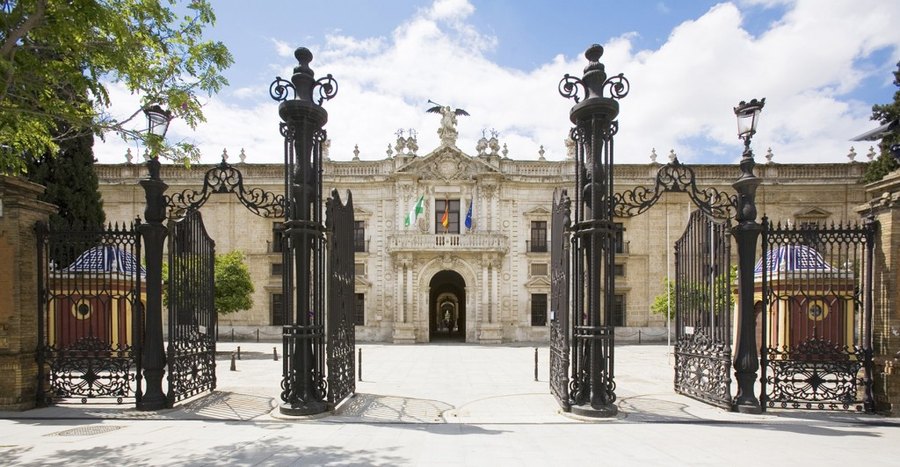
University of Seville Tour

September 22

Classes Begin

October 13

Official Holiday

October 22-23

Midterm Exams

December 8

Official Holiday

December 10-11

Final Exams

December 12

Program Ends

Semester and year-long students need a visa. Please check with your sponsoring institution and/or the nearest Spanish Embassy or Consulate for more information. 

Download


Cultural Trips

Jerez / Bolonia Sep. 27
Morocco Oct. 24-26
Granada Nov. 7-8
Córdoba Nov. 29

City Cultural Visits

Plaza de América / España Sep. 19
Itálica Sep. 26
Alcázar Oct. 17
Cathedral Nov. 14

Córdoba

Córdoba is a town of considerable charm, known widely for its beautifully flowered courtyards, its narrow cobblestoned streets, its secluded niches and tiny workshops where silversmiths create fine jewelery and, of course, for its impressive history which once exemplified harmony among cultures. For centuries, Christians, Jews, and Muslims lived in peaceful coexistence. But Córdoba is most known throughout the world for its magnificent decorative architecture, as seen in the great Mosque.Situated at an hour and a half north of Seville today Córdoba is a minor provincial capital, but it was once the largest city of Roman Spain, and for three centuries formed the heart of the western Islamic empire, the great medieval caliphate of the Moors. The heyday of the Córdoba caliphate came in the 10th Century. While parts of Europe languished in the Dark Ages, Córdoba became a center of advanced learning in sciences, medicine, philosophy and poetry.

See more about Córdoba

Together with Baghdad and Constantinople, it was considered one of the three greatest cities in the world. In this city, where Seneca studied, there developed a stream of illustrious thinkers among them Averroes, the Arabian scholar, and Maimónides, the Jewish philosopher. In Córdoba, ICS students are taken on tour of the famous Mezquita, or Mosque, begun in the year 785 and extended through the 10th Century. It is the third largest in the world and is considered unparalleled for the beauty of its architecture and the vastness of its dimensions as well as the sumptuousness of its decoration.It is also one of the greatest historical landmarks of Spain. After the Mosque, students walk through the heart of the old city, the former Jewish quarters, with its labyrinth of winding streets, passing whitewashed houses and flowered patios to the Ancient Jewish Synagogue, one of the three ancient synagogues still in existence in Spain. This small Mudéjar-style synagogue, built in 1315, was one of 26 that once stood in the city. Fortunately, one can still appreciate segments of Hebraic inscriptions on the walls. The upper gallery where women were seated, and the niche where the Torah was kept are still intact. To complete the guided visit to medieval Córdoba, ICS students are taken to see the Alcázar de los Reyes Cristianos, or Christian palace-fortress. After touring the city, the students are given the rest of the day free to explore this uniquely sublime city.

Granada

Granada is a city where centuries of history meet stunning natural beauty. Known for the majestic Alhambra, a UNESCO World Heritage Site and one of the most visited monuments in Spain, the city showcases a unique blend of Islamic, Christian, and Jewish influences. Its medieval Albaicín neighborhood, with its narrow cobblestone streets and whitewashed houses, offers breathtaking views of the Alhambra and the Sierra Nevada mountains.Situated two and half hours from Seville, today Granada is has a vibrant flamenco scene, with authentic performances echoing throughout the Sacromonte district. The city’s youthful energy, fueled by its large student population, creates a vibrant atmosphere full of tapas restaurants, teahouses, and live music.

From its Moorish architecture and Renaissance cathedral to its free tapas culture and proximity to both ski slopes and Mediterranean beaches, Granada is a city that captures the imagination and leaves a lasting impression on all who visit.

See more about Granada

Granada’s history is a rich tapestry woven from diverse cultures and civilizations. Originally settled by the Iberians and later the Romans, the city rose to prominence during the Islamic period, becoming one of the most important cities in Al-Andalus (Muslim Spain). In 1238, it became the capital of the Nasrid Kingdom of Granada, the last Muslim kingdom on the Iberian Peninsula.During this time, Granada flourished as a center of art, science, and architecture, culminating in the construction of the stunning Alhambra, a symbol of Islamic architectural brilliance.

In 1492, Granada was the last Muslim stronghold to fall during the Christian Reconquista, when it was captured by the Catholic Monarchs, Ferdinand and Isabella. This pivotal event marked the unification of Spain and the beginning of a new era.

Today, Granada’s layered history is visible in its Moorish palaces, Catholic cathedral, and ancient neighborhoods, making it a living monument to Spain’s multicultural past.

Morocco

During our three-day trip to Morocco we will visit the cities of Tangier, Chefchauen, and Tetuan.
We leave from Seville in private bus to the port city of Algeciras. From there we cross the Straight of Gibraltar to the city of Ceuta in the fast ferry. Our first visit will be to the city of Tangier, a Moroccan port city on the Strait of Gibraltar, which has been a strategic gateway between Africa and Europe since Phoenician times. Its whitewashed hillside medina is home to the Dar el Makhzen, a palace of the sultans turned museum of Moroccan artifacts. The medina also has dozens of outdoor cafes, such as those along the Terrasse des Paresseux balcony overlooking the Mediterranean. Students will enjoy a walking tour of the city and a camel ride on the beach of Cape Spartel. Dinner will be at our four star hotel.

See more about Morocco

On the second day we will visit the blue city of Chefchauen where we will have a guided tour of the old town, stop at a typical handmade carpet co-op, and have a picturesque hike up a mountain to the Old Mosque. We will have lunch together at the beautiful Parador and then have free time for shopping. Afterwards, we will travel to the city of Tetuan where we will enjoy a most memorable Fantasy Dinner Show with Moroccan musicians and dancers.On the third day of our trip we will have a guided tour of the old town of Tétouan. The Berber name means literally “the eyes” and figuratively “the water springs”. Tétouan is one of the two major ports of Morocco on the Mediterranean Sea where we will visit the shops in the Medina and the natural Berber pharmacy.We will travel back to Ceuta where we will have lunch and take the fast ferry to Algeciras and return to Seville.

Bolonia and El Puerto Santa Maria

El Puerto de Santa María is a historic coastal town known for its centuries-old winemaking tradition. There are many local bodegas where visitors can to take part in guided wine tastings, learn about the region’s signature sherries and wines, as well as the cultural significance of this culture in Andalusia.Bolonia is a picturesque village on the Atlantic coast, where visitors can tour the ancient Roman city of Baelo Claudia. Right next to the beach, people can explore the ruins of temples, baths, and a Roman theater, set against the backdrop of the sea.Bolonia’s pristine beach as includes beautiful sand dunes that many beachgoers climb. It is a natural landmark offering sweeping views of the coastline and beyond.

This cultural day trip offers a balance of historical exploration, local tradition, and time in nature, providing a rich snapshot of southern Spain’s heritage and landscape.


All dates are tentative. 

ICS Courses Fall 2025

In Spanish
  • SPN 1120 Beginning Spanish I
  • SPN 1121 Beginning Spanish II
  • SPN 1000 Elementary Spanish Conversation
  • SPN 2200 Intermediate Spanish I
  • SPN 2201 Intermediate Spanish II
  • SPN 2240 Intermediate Spanish Conversation
  • SPN 3340 Spanish For Native Speakers
  • SPN 3955 Advanced Composition & Conversation I
  • SPN 4930 Comparative Grammar
  • SPN 3011 Contemporary Spanish Literature
  • EUH 3052 History of Spain
  • SPN 3403 Service Learning
In English
  • SPN 3381 Culture & Society of Spain
  • ARH 3351 The Art of Spain
  • ARH 3000 Art Appreciation
  • INR 3002 International Relations
  • EUH 3090 Three Cultures
  • GEB 3955 International Business
  • BUS 1102 Introduction to Technology-based Innovation & Entrepreneurship

  • BUS 3367 Business Study Abroad: Digital Transformation in Europe

Other courses that may be offered if there is sufficient demand (minimum five students):

  • ARH 3000 Art Appreciation
  • EUH 3141 The Mediterranean World
  • FIN 3050 Finance of International Trade
  • MAR 3550  US / EU Bilateral Trade
  • ECO 3490 The Economies of the European Union
  • CINE 3384 Screenwriting in Spain
  • CINE 3450 America´s Best Spanish Directors

ICS Class Schedule For Fall 2025

Time/Day Monday Tuesday Wednesday
Thursday
09:00 to 11:00

International Business
(Room Seminario)

Adv. Composition and Conversation I
(Room B)

International Business
(Room Seminario)

Adv. Composition and Conversation I
(Room B)

11:00 to 1:00 Culture and Society of Spain
(Room 3)
America’s Best Spanish Directors
(Room 3)
Culture and Society of Spain
(Room 3)
America’s Best Spanish Directors
(Room 3)
1:00 to 3:00 Three Cultures
(Room 3)


Screen Writing in Spain
(Room 4)

The Art of Spain
(Room 4)
Three Cultures
(Room 3)


Screen Writing in Spain
(Room 4)

The Art of Spain
(Room 4)
4:00 to 7:00

Beginning Spanish (Room 3)

Intermediate Spanish (Room B)

Beginning Spanish (Room 3)

Intermediate Spanish (Room B)

Beginning Spanish (Room 3)

Intermediate Spanish (Room B)

Beginning Spanish (Room 3)

Intermediate Spanish (Room B)

Classes and schedule may be subject to change